



Coriander (Coriandrum sativum), an aromatic plant native to Asia/the Orient, is quite fickle to grow without it going to seed too quickly. Discover our growing method for your own home.

Starting your own seedlings is a real step forward for gardeners and
has many advantages. Discover the Terrazen Market method
for seedlings that we developed on agar-agar substrate.
How to grow cilantro all year round.
With our indoor vegetable gardens lit with horticultural LEDs, it’s possible to grow at home all year round. Growing cilantro with agar-agar substrate eliminates the need for watering during seed germination.
Find information for successful sowing in this article.
agar-agar
For growing coriander, we use exactly the same agar-agar as for growing microgreens. However, we fill the perforated tray to the brim. In hot weather, you can proceed as for growing basil by doubling the agar. At this stage, you can broadcast your coriander seeds fairly tightly. For the small vegetable garden tray, we use a large tablespoon of seeds (15 ml).
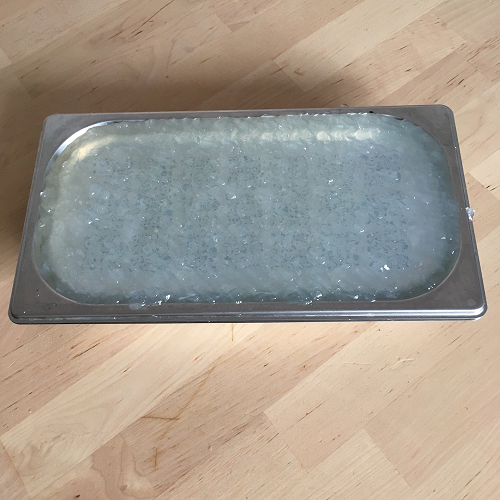
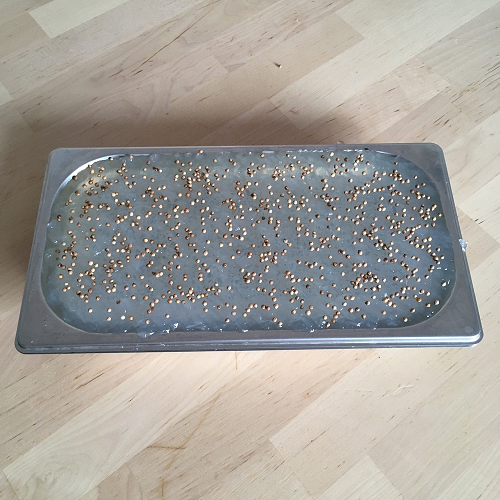
Mulching
For longer-lasting herb crops, we use a fine, light mulch to protect the agar from too much light, which eventually turns green. Mulching also reduces evaporation of the agar and allows the seed to germinate in the dark (no need for a cover). Mulching also supports the stem, but cilantro doesn’t hold its shape very well when growing; its stem is very thin.
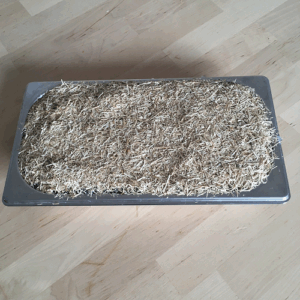
Place the container away from light or under a cover until the first germinations. Provide 12 hours of light per day under LED lights in your vegetable garden.
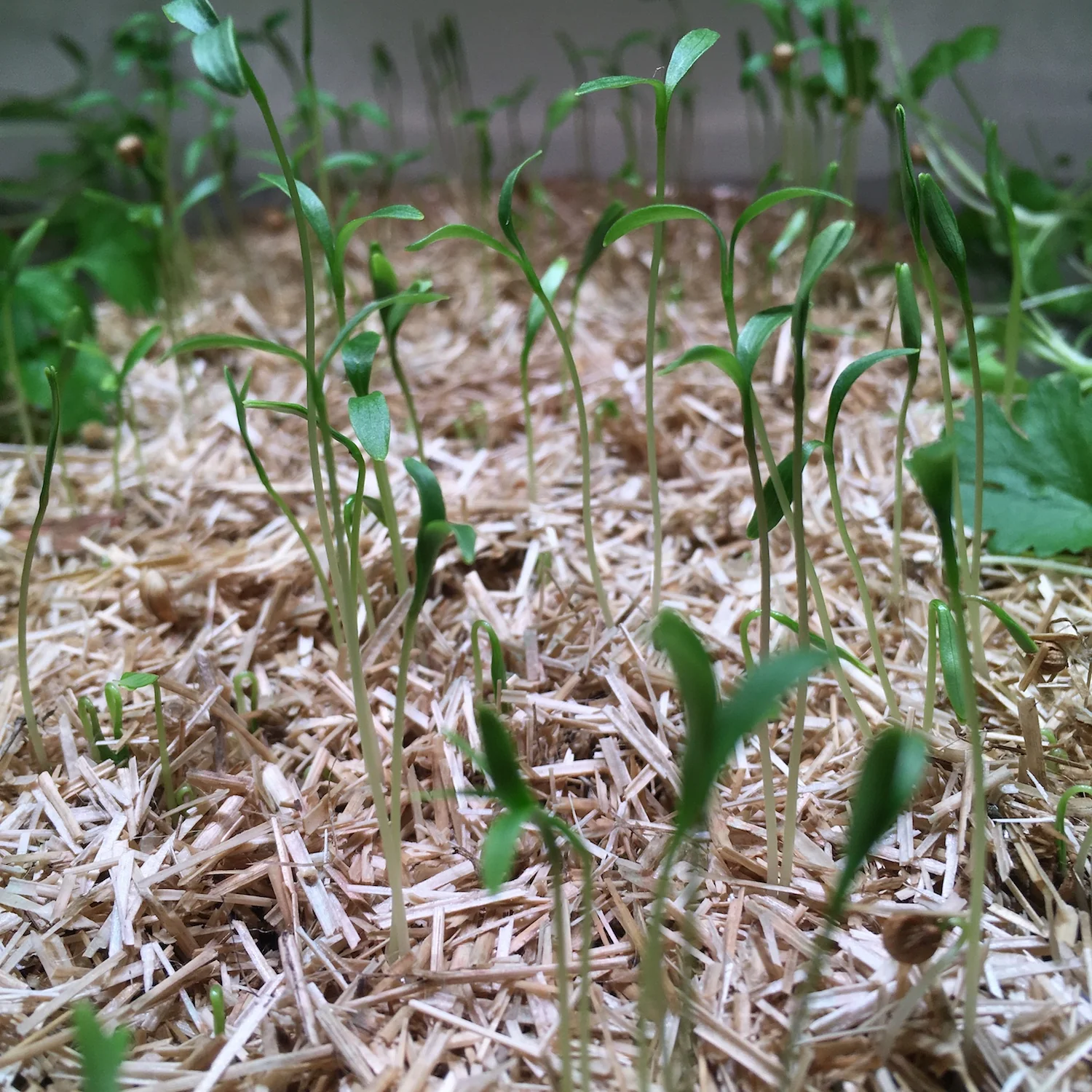
The coriander seed will produce a seedling (microshoot) with a very thin, 7/8 cm long stem.
The seedling takes a long time to emerge; it takes an average of 15 days. Then the first true coriander leaves appear.
The roots should be touching the water in the reserve container. Fill the container with water to the level of the perforated tray from the beginning of the growing season.
You can harvest after a month or let the coriander reach maturity in about two months.


Water level of the reservoir tray,
The reservoir tray must have water at all times. The water level will vary during the growing season (climatic conditions), so you will need to add water regularly. Prepare a bottle of water with 2g of nutrients per liter of water to fill the reservoir tray with (cilantro is more demanding in nutrients, we have increased the amount of nutrients). It is best to lift the perforated growing tray to top up the level so as not to disturb the cilantro seedlings. We recommend topping up the water for the first time when the first roots appear through the holes (this will allow the very young roots to come into contact with the water). Fill the tray just below the holes. It is important that the water level does not touch the perforated tray (to maintain the water/air interface and thus maintain good oxygenation of the water).
In practice
In practice, this information will vary. The season, temperature, humidity, and air circulation (wind) will impact the evaporation of the agar and the evapotranspiration of the coriander. It’s also very easy to modify the texture of the growing medium by adding more or less agar powder to the water. We usually add 4g of agar powder per liter.
We recommend (if possible) growing your plants outdoors during the summer months. Make sure the young coriander shoots have already grown sufficiently to form a canopy capable of withstanding the sun and wind (approximately 20 days). After a few crops, you’ll quickly master all the parameters.
Discover our Indoor Urban Vegetable Gardens


